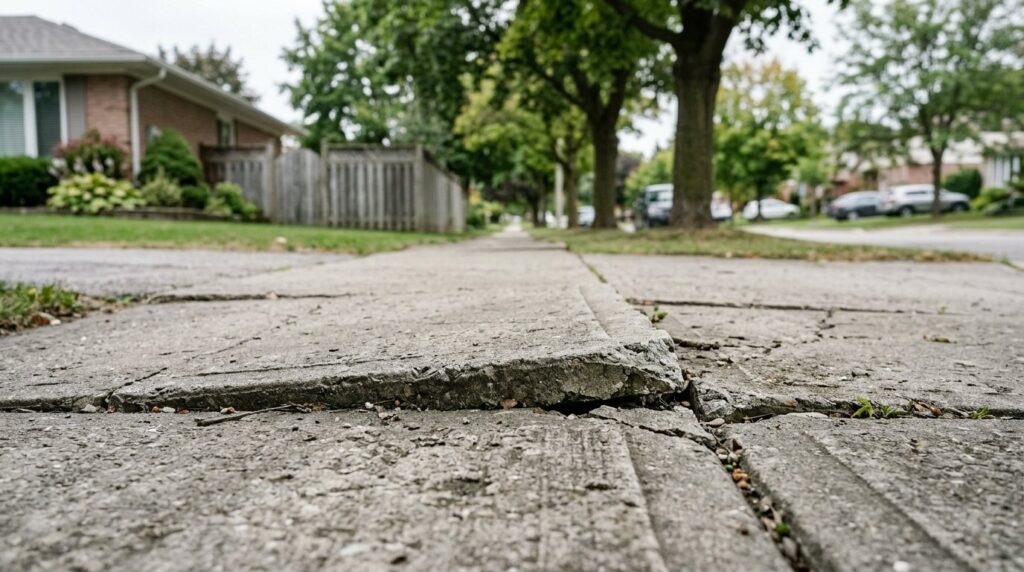
Sidewalk liability depends on where the hazard is located and who has the legal duty to maintain that section.
27
Nov

Sidewalk liability depends on where the hazard is located and who has the legal duty to maintain that section.
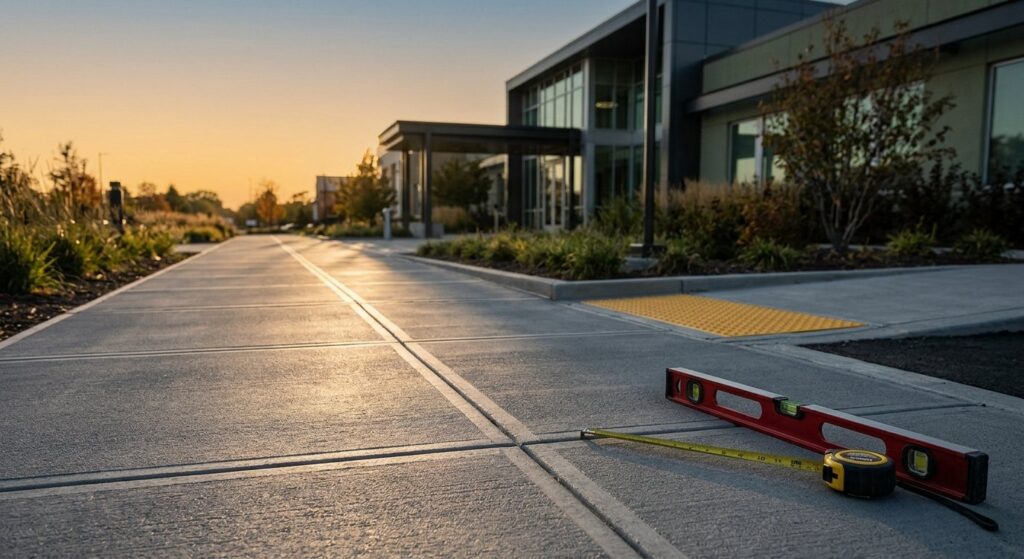
ADA sidewalk slope requirements set two critical limits: a maximum running slope of 1:20 (5%) along the direction of travel and a maximum cross slope of 1:50…
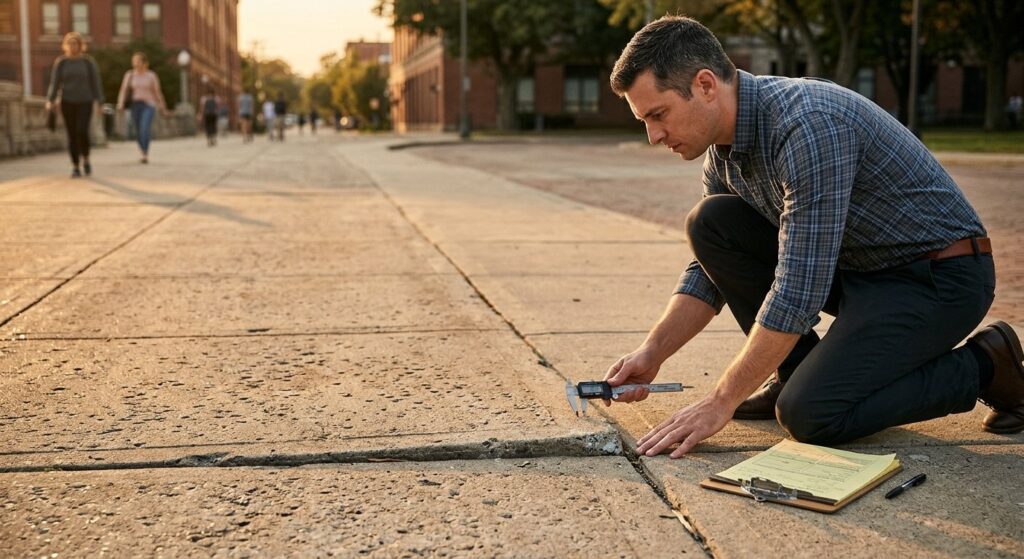
A sidewalk repair priority matrix ranks trip hazards across multiple locations by scoring each defect against four criteria: ADA compliance risk, liability e…
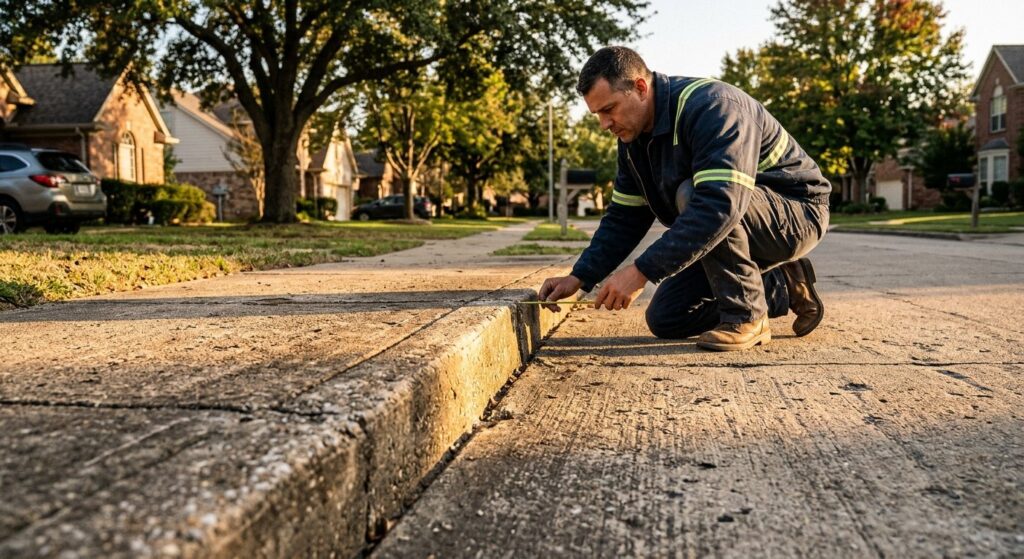
Concrete leveling and concrete grinding solve different problems.

A sidewalk inspection report documents every defect found on a property’s walkways, assigns a severity rating to each, and indicates whether the condition me…
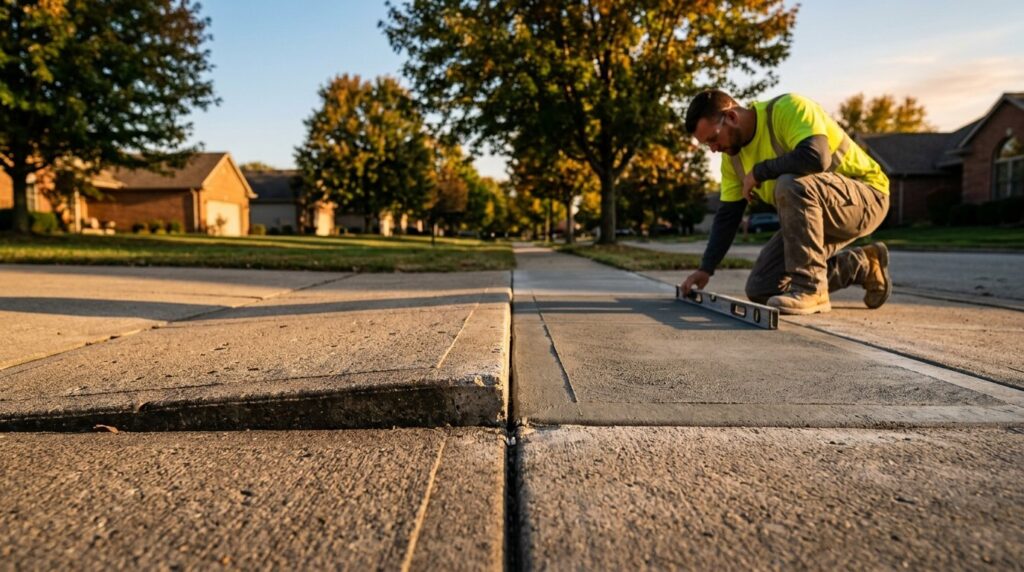
When correcting an uneven concrete sidewalk, grinding and mudjacking address the problem in fundamentally different ways.
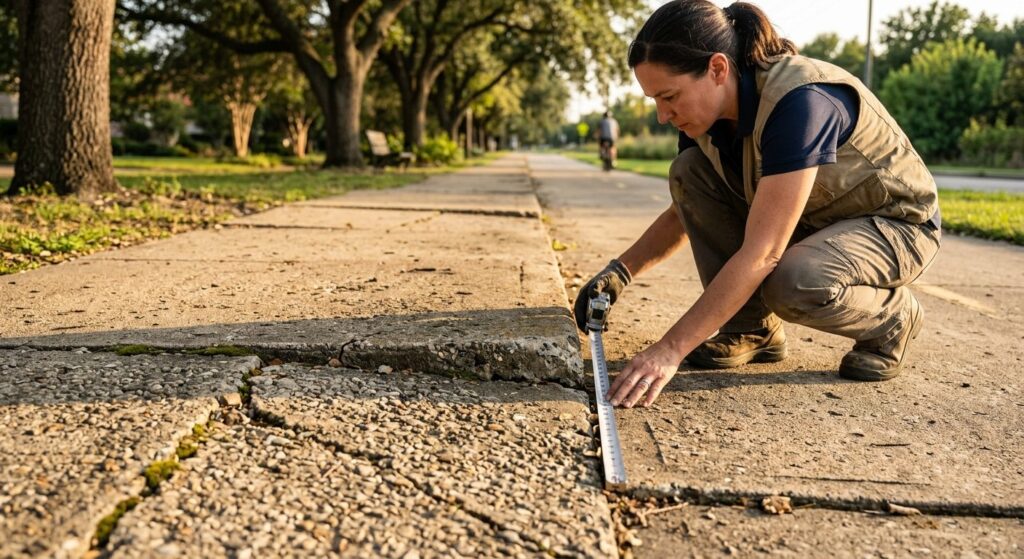
Identifying sidewalk trip hazards before a formal audit means conducting a systematic, walking inspection of all paved pathways, measuring vertical changes a…

School districts are legally required to maintain sidewalks and pedestrian pathways that meet ADA accessibility standards.

Passing a commercial sidewalk ADA audit requires your walkways to meet specific dimensional standards: no vertical changes exceeding ¼ inch, cross-slopes no…
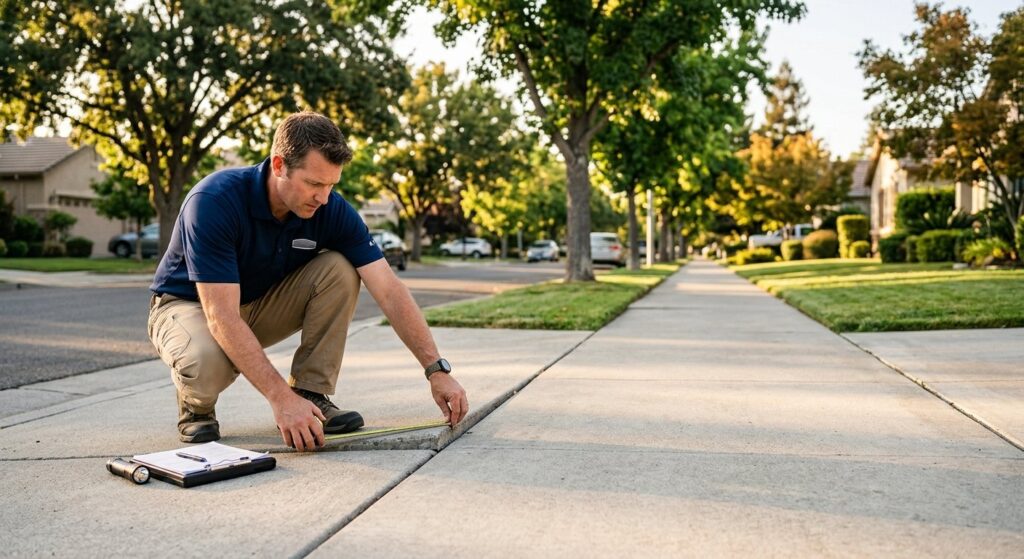
HOA Sidewalk Budgeting for Trip Hazard Repairs A single trip-and-fall lawsuit can cost an HOA anywhere from $30,000 to several hundred thousand dollars — f…