
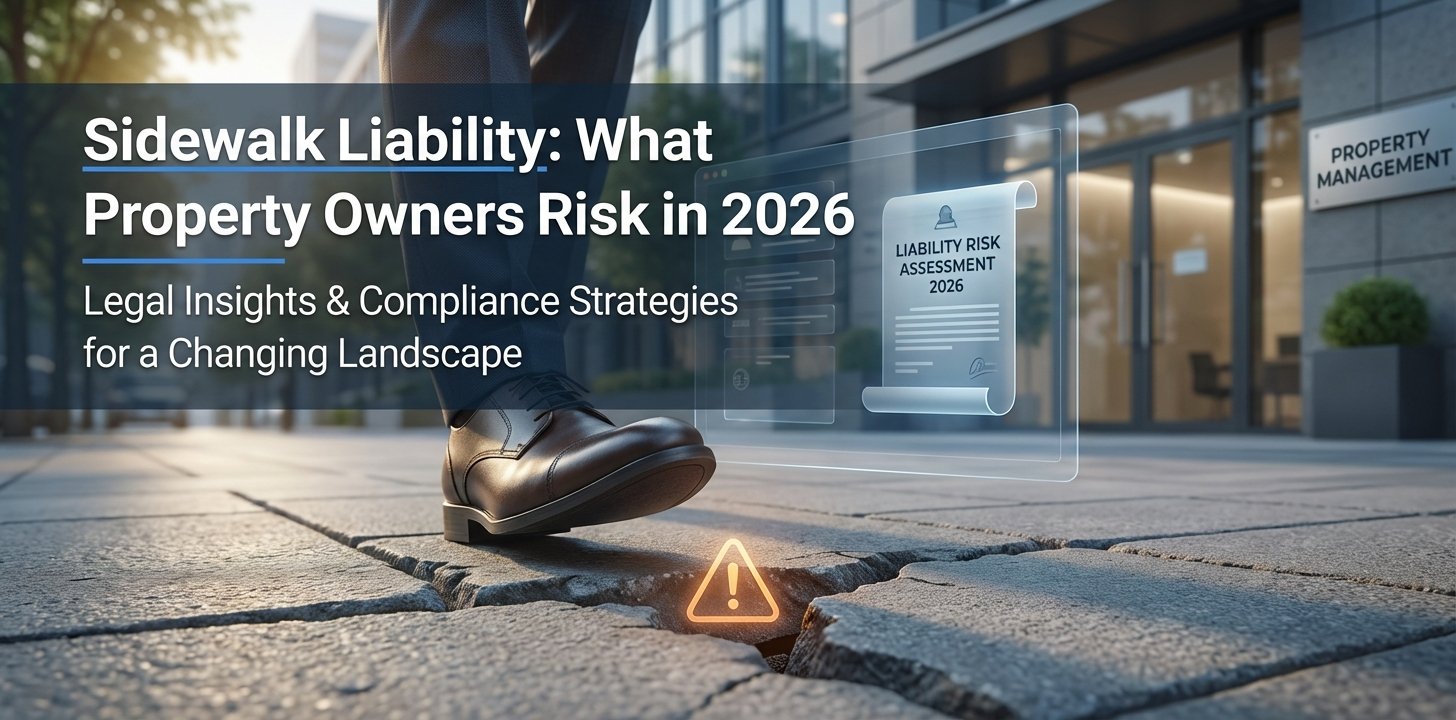
A single sidewalk trip-and-fall incident can cost property owners anywhere from $50,000 to over $1 million in legal settlements, medical expenses, and increased insurance premiums. As we move through 2026, the legal landscape surrounding sidewalk liability has become increasingly complex, with courts demonstrating less patience for property owners who neglect basic maintenance responsibilities. Understanding your exposure and taking proactive steps to eliminate trip hazards isn’t just about compliance—it’s about protecting your financial interests and the safety of everyone who walks on your property.
The Legal Reality of Sidewalk Liability in 2026
Property owners face significant legal exposure when sidewalks under their control present hazardous conditions. The duty to maintain safe walking surfaces extends to commercial property owners, residential landlords, homeowners associations, municipalities, and educational institutions. This responsibility isn’t optional, and ignorance of existing hazards provides no legal protection.
According to the Americans with Disabilities Act (ADA), any vertical displacement of ¼ inch or greater constitutes a trip hazard requiring remediation. This seemingly small measurement carries enormous legal weight. When injuries occur on non-compliant sidewalks, property owners face premises liability claims that can result in substantial verdicts. The legal standard typically requires proving that the property owner knew or should have known about the hazardous condition and failed to address it within a reasonable timeframe.
Recent case law demonstrates that courts are increasingly holding property owners to higher standards of proactive maintenance. Waiting until someone reports a problem is no longer considered adequate due diligence. Regular inspections and documented maintenance programs have become essential components of any robust risk management strategy.
Understanding Your Exposure: The True Cost of Sidewalk Accidents
The financial impact of sidewalk-related injuries extends far beyond the immediate medical costs. When evaluating your potential liability exposure, consider these factors:
Direct Financial Costs
- Medical expenses: Emergency room visits, surgeries, physical therapy, and long-term care for serious injuries like hip fractures or traumatic brain injuries
- Legal fees: Defense costs can easily reach $50,000 or more, even if you ultimately prevail
- Settlement or judgment amounts: Compensatory damages for pain and suffering, lost wages, and reduced quality of life
- Property damage: In some cases, injured parties may claim damage to personal property during the fall
Indirect Costs
- Insurance premium increases: A single claim can raise your liability insurance rates for years
- Reputation damage: For commercial properties, public injury incidents can deter customers and tenants
- Administrative burden: Managing claims, depositions, and litigation requires significant time and resources
- Regulatory scrutiny: One incident may trigger inspections that reveal additional compliance issues
ADA Compliance: Non-Negotiable Standards for 2026
The ADA establishes clear requirements for accessible routes, and these standards apply to virtually all public accommodations and commercial facilities. Compliance isn’t just about avoiding discrimination lawsuits—it’s fundamental to creating safe walking surfaces for everyone.
Key ADA requirements for sidewalks include:
- Maximum vertical displacement: Changes in level up to ¼ inch are permitted; anything greater requires treatment
- Slope requirements: Ramps must maintain a 1:12 ratio (one inch of rise for every twelve inches of horizontal run), with cross slopes not exceeding 1:48
- Surface characteristics: Walking surfaces must be stable, firm, and slip-resistant to meet OSHA standards
- Clear width: Accessible routes require a minimum continuous clear width of 36 inches
For property owners, understanding these standards is essential because non-compliance creates dual exposure: potential personal injury claims and separate ADA violation penalties. The Department of Justice has demonstrated increased enforcement activity in recent years, with settlements often requiring not just remediation but also substantial civil penalties.
Common Causes of Sidewalk Liability Claims
Understanding how trip hazards develop helps property owners implement effective prevention strategies. The most frequent causes of liability-creating conditions include:
Tree root intrusion: As trees mature, their root systems can lift concrete sections, creating dangerous vertical displacements. This natural process accelerates in certain soil conditions and with specific tree species.
Soil settlement and erosion: Inadequate base preparation, water intrusion, or soil composition changes cause concrete slabs to settle unevenly over time, producing hazardous lips between sections.
Freeze-thaw cycles: In regions experiencing temperature fluctuations, water infiltration followed by freezing can cause concrete heaving and cracking that creates trip hazards.
Poor initial installation: Corners cut during original construction—inadequate base material, improper jointing, or insufficient reinforcement—manifest as premature failure and hazardous conditions.
Deferred maintenance: Small problems compound when ignored. A minor crack becomes a major displacement; a small settlement becomes a dangerous differential.
Repair Concrete Sidewalk Trip Hazard: Your Options Compared
When facing the need to fix uneven sidewalk surfaces and eliminate trip hazards, property owners traditionally confronted two options: grinding or complete replacement. Both present significant limitations that savvy decision-makers should understand.
Traditional Grinding: Limitations and Drawbacks
Concrete grinding removes material from the raised section to create a gradual slope. While less expensive than replacement, grinding cannot address all situations. It’s ineffective when the lower slab has settled significantly, when ADA-compliant 1:12 slopes cannot be achieved within available space, or when the raised section is already at minimum thickness. Grinding also reduces concrete thickness, potentially compromising structural integrity, and creates dust and debris requiring extensive cleanup.
Complete Replacement: The Expensive Standard
Removing and replacing concrete sections ensures level surfaces but comes with substantial costs—typically $8 to $15 per square foot or more for commercial projects in 2026. Replacement projects require extended timelines, create significant disruption, generate substantial waste requiring disposal, and often necessitate lengthy curing periods before the surface can bear weight.
Precision Cutting Method: The Cost-Effective Solution
Advanced sidewalk trip hazard repair using precision cutting technology addresses the limitations of both traditional approaches. This patented method removes material from the underside of raised concrete slabs, allowing them to settle precisely into position and achieve zero vertical differential.
The advantages for addressing sidewalk liability concerns are substantial:
- ADA compliant sidewalk repair: Achieves the 1:12 slope requirement and eliminates vertical displacement exceeding ¼ inch
- Cost savings: Typically 70-90% less expensive than complete replacement, with most commercial sidewalk repair projects completed at $3 to $5 per square foot
- Minimal disruption: Most repairs complete within hours, not days or weeks
- Environmental responsibility: Debris is recycled rather than sent to landfills, and existing concrete remains in place
- Superior surface characteristics: Maintains original slip-resistant finish and full structural thickness
- Immediate usability: No curing time required; walkways are accessible as soon as work completes
Sidewalk Accident Prevention: Building a Proactive Program
The most effective approach to managing sidewalk liability combines regular assessment, prompt remediation, and thorough documentation. Property owners should implement these essential practices:
Regular Inspection Protocols
Establish a documented inspection schedule—quarterly for high-traffic commercial properties, semi-annually for lower-traffic areas. Train designated staff to identify conditions requiring attention, focusing on vertical displacements, cracking, spalling, and drainage issues. Document findings with photographs, measurements, and written descriptions that create a defensible record of your diligence.
Prioritized Response System
Not all issues require immediate attention, but having clear criteria for prioritization demonstrates responsible management. Address any displacement exceeding ¼ inch promptly, particularly in high-traffic areas. Create a remediation timeline for lesser issues and document your decision-making process.
Professional Assessment
Engaging qualified contractors to evaluate your walkways provides expert identification of hazards you might overlook and establishes third-party validation of conditions. Professional assessments also generate documentation useful in demonstrating due diligence should liability questions arise.
Insurance Considerations and Risk Transfer
While liability insurance provides essential protection, it shouldn’t substitute for proactive hazard elimination. Insurance carriers increasingly scrutinize premises liability claims, and repeated incidents can result in coverage denial or policy non-renewal. Some insurers now offer premium reductions for property owners who implement documented sidewalk maintenance programs, recognizing that prevention reduces claims.
Review your policy to understand coverage limits, deductibles, and any exclusions related to known hazards or deferred maintenance. Many policies contain provisions that reduce or eliminate coverage when the property owner had knowledge of a hazardous condition but failed to address it within a reasonable timeframe.
Municipal and Commercial Property: Enhanced Exposure
Municipalities, schools, shopping centers, office parks, and other high-traffic properties face amplified liability exposure. The volume of pedestrian traffic increases incident probability, while the public nature of these spaces creates heightened duty-of-care standards.
For these property types, reactive maintenance isn’t defensible. Courts expect institutional property owners to maintain comprehensive inspection programs, respond promptly to identified hazards, and allocate adequate budgets for sidewalk maintenance. The good news is that cost-effective solutions like precision cutting make comprehensive sidewalk accident prevention achievable even within constrained budgets.
Taking Action: Protecting Your Interests in 2026
Understanding your sidewalk liability exposure represents the first step toward effective risk management. The second step involves action—assessing current conditions, addressing identified hazards, and implementing ongoing maintenance protocols.
The financial equation strongly favors proactive intervention. Investing in ADA compliant sidewalk repair and eliminating trip hazards costs a fraction of defending even a single liability claim. When you consider that modern cutting methods deliver compliant results at 70-90% below replacement costs, the decision becomes straightforward.
Property owners who postpone addressing known trip hazards assume substantial and unnecessary risk. Every day that a non-compliant condition persists represents potential exposure to life-changing financial liability. Conversely, property owners who conduct regular inspections, address hazards promptly using cost-effective methods, and document their diligence create powerful defenses against both incidents and claims.
Don’t wait for an injury to occur before addressing sidewalk safety. Contact a qualified professional to assess your property’s walkways, identify any vertical displacements or ADA compliance issues, and develop a remediation plan that protects pedestrians while safeguarding your financial interests. The modest investment in proper sidewalk trip hazard repair today prevents the devastating costs of liability claims tomorrow.