
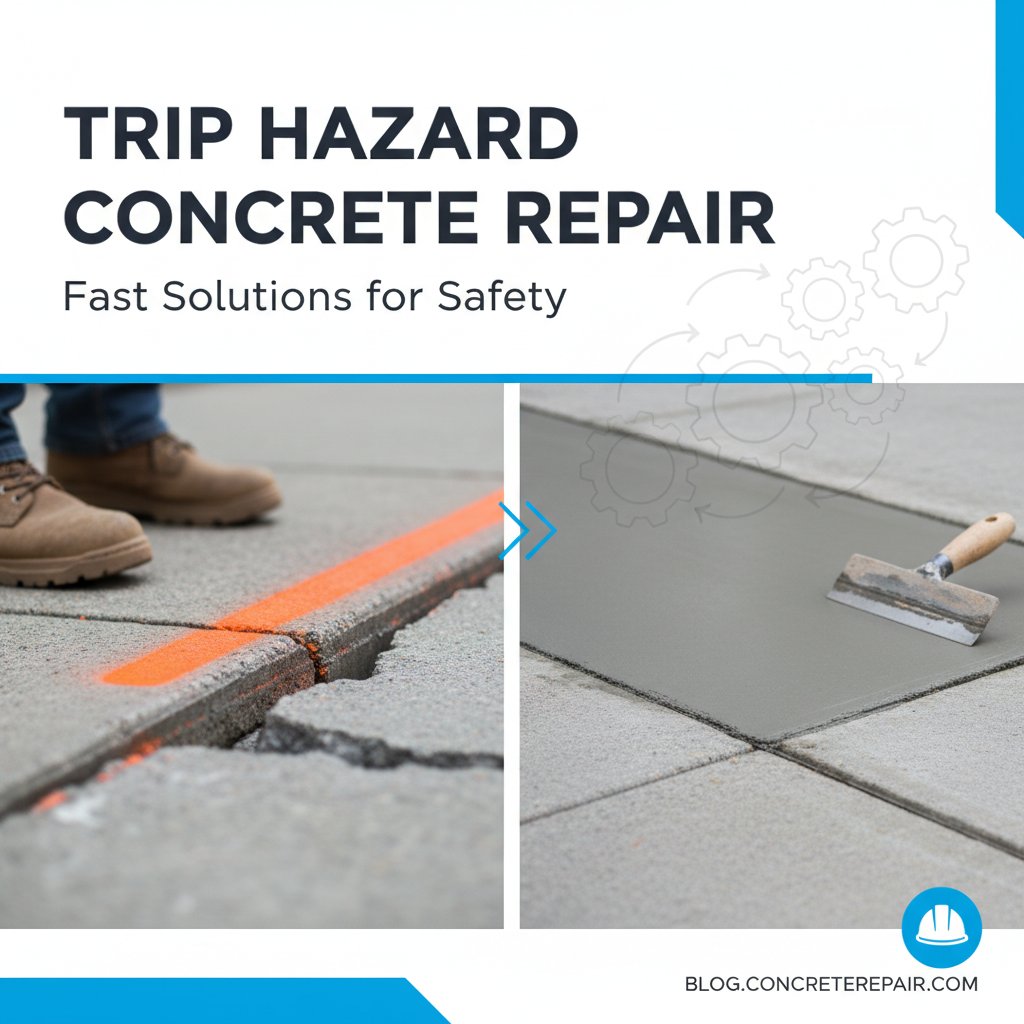
A single uneven concrete slab can transform a routine walk into a lawsuit. In 2026, premises liability claims related to trip and fall incidents cost property owners an average of $48,000 per claim, with some cases reaching settlements well into six figures. For property managers, facility directors, and municipal authorities, the question isn’t whether to address trip hazards—it’s how to eliminate them quickly, cost-effectively, and in full compliance with safety regulations.
Understanding Trip Hazards and Legal Requirements
According to the Americans with Disabilities Act (ADA), any vertical displacement exceeding ¼ inch between adjacent concrete surfaces constitutes a trip hazard requiring immediate attention. This seemingly small measurement carries significant weight. The ADA Standards for Accessible Design specify that changes in level between ¼ inch and ½ inch must be beveled with a slope no greater than 1:2, while anything exceeding ½ inch requires a compliant ramp with a maximum slope of 1:12.
These aren’t merely suggestions. Property owners face strict liability when individuals sustain injuries on their premises due to unaddressed trip hazards. Municipal entities, commercial property owners, homeowners associations, and educational institutions all share the responsibility for maintaining safe, accessible walkways. The Occupational Safety and Health Administration (OSHA) adds another layer of requirements, mandating slip-resistant surfaces to prevent accidents in wet conditions.
Common Causes of Concrete Trip Hazards
Understanding why sidewalk trip hazards develop helps property managers implement proactive maintenance strategies. Several factors contribute to uneven concrete surfaces:
- Soil Settlement and Erosion: Water infiltration beneath concrete slabs gradually washes away supporting soil, causing sections to sink or shift.
- Tree Root Growth: Expanding root systems exert tremendous pressure, lifting adjacent slabs and creating dangerous elevation changes.
- Freeze-Thaw Cycles: Water penetration and subsequent freezing causes concrete to crack and heave, particularly problematic in northern climates.
- Poor Initial Installation: Inadequate base preparation, improper grading, or substandard materials accelerate deterioration.
- Heavy Traffic and Load Stress: Repeated vehicle traffic over pedestrian walkways can compress soil and crack concrete.
Regardless of cause, the outcome remains the same: liability exposure and potential injury to pedestrians. The solution requires addressing both the immediate hazard and the underlying structural issues.
Traditional Repair Methods: Limitations and Drawbacks
Concrete Grinding
Standard grinding involves using diamond-blade equipment to smooth down raised edges, creating a gradual transition between uneven slabs. While this approach may temporarily reduce trip hazards, it presents significant limitations. Ground surfaces often remain rough, creating new slip hazards that violate OSHA requirements. The process generates substantial dust, requiring extensive cleanup and creating environmental concerns. Most critically, grinding cannot achieve true zero-differential compliance or the precise 1:12 ADA-compliant slope required for changes exceeding ½ inch.
Ground surfaces also deteriorate faster than original concrete, as the process exposes aggregate and weakens the surface layer. Within months, weather exposure and foot traffic can reverse any safety improvements, requiring repeated interventions.
Complete Replacement
Total slab replacement guarantees level surfaces and full ADA compliance, but at extraordinary cost. Replacement involves demolition, debris removal, site preparation, forming, pouring, finishing, and curing—a process requiring 3-7 days per section. Costs typically range from $8 to $15 per square foot for standard sidewalk replacement, with expenses climbing higher for complex installations or restricted access areas.
The disruption factor cannot be overlooked. Extended closures of walkways create accessibility issues, force pedestrian detours, and can impact business operations. For municipal projects, replacement often requires multiple mobilizations, traffic control, and extended timelines that delay resolution of hazardous conditions.
Advanced Cutting Method: Superior Results at Fraction of Cost
A patented precision cutting method addresses the fundamental limitations of grinding and replacement, delivering ADA-compliant results at 70-90% cost savings versus replacement. This engineered approach represents a paradigm shift in how professionals eliminate sidewalk trip hazards.
How the Process Works
The cutting method employs specialized equipment that makes precise, controlled cuts through concrete slabs at exact angles. Unlike grinding, which removes material horizontally, cutting creates clean, engineered transitions that achieve true zero differential between adjacent surfaces. For elevation changes requiring ramps, the process creates perfect 1:12 slopes that fully comply with ADA accessibility standards.
The technical precision delivers several critical advantages. Cut surfaces maintain the original concrete strength and integrity, unlike ground surfaces that expose aggregate and weaken over time. The process generates minimal dust compared to grinding operations, and all concrete debris is collected and recycled rather than entering landfills. Most importantly, the cutting method addresses the structural reality of the trip hazard rather than simply masking the problem.
Speed and Efficiency
Time represents a crucial factor when addressing safety hazards. The advanced cutting method allows technicians to repair concrete sidewalk trip hazard conditions in hours rather than days. A typical residential sidewalk section can be corrected in 1-2 hours. Commercial properties with multiple hazards can see comprehensive remediation completed in a single day.
This rapid turnaround minimizes disruption to pedestrian traffic and business operations. No curing time is required—walkways return to full service immediately upon completion. For municipal entities managing public spaces or commercial properties maintaining customer access, this efficiency provides tremendous operational value.
Cost Effectiveness
The financial advantages of precision cutting become apparent in direct comparison. While replacement costs $8-$15 per square foot and requires multiple days of labor, the cutting method typically costs $3-$5 per linear foot of trip hazard eliminated. For a standard 4-foot-wide sidewalk with a 6-inch raised section, replacement might cost $200-$300 while cutting resolves the hazard for $45-$75.
These savings multiply across larger projects. A municipal sidewalk program addressing 100 trip hazards could save $20,000-$40,000 by implementing the cutting method versus replacement. For budget-conscious facility managers and public works departments, this cost efficiency enables more comprehensive safety programs—addressing every identified hazard rather than prioritizing only the most severe due to budget constraints.
Ensuring Complete ADA and OSHA Compliance
Regulatory compliance provides legal protection and ensures genuine accessibility. The cutting method achieves specifications that grinding cannot match. Precision equipment creates exact 1:12 slopes for required ramps, verified through measurement to ensure compliance. The process eliminates vertical differentials completely, going beyond minimum standards to create the safest possible walking surface.
Cut surfaces maintain OSHA-compliant slip resistance because they preserve the original concrete finish rather than creating new texture concerns. This attention to multiple regulatory requirements provides comprehensive risk mitigation—protecting property owners from both ADA accessibility claims and general premises liability exposure.
When to Repair Versus Replace
While the cutting method solves most trip hazard situations, certain conditions warrant full replacement. Severely deteriorated concrete with extensive cracking, spalling, or structural damage may not support cutting repairs. Slabs with widespread surface failure or those that have sunk more than 2-3 inches often require replacement and soil stabilization.
However, these scenarios represent a minority of trip hazard cases. The vast majority of elevation changes result from minor settlement or heaving—conditions perfectly suited to the cutting method. A professional assessment can determine the appropriate solution for specific circumstances.
Implementing a Proactive Safety Program
The most effective approach to sidewalk trip hazard removal involves regular inspections and prompt remediation. Property managers should conduct quarterly walkway assessments, documenting any elevation changes with photographs and measurements. This documentation serves dual purposes: prioritizing repairs and demonstrating due diligence should liability claims arise.
When inspections identify trip hazards, immediate action protects both pedestrians and organizational interests. The speed and affordability of the cutting method enable responsive maintenance programs that address hazards within days of identification rather than waiting for budget cycles or scheduling complex replacement projects.
Environmental Responsibility in Concrete Repair
Sustainability considerations increasingly influence facility management decisions. The cutting method aligns with environmental stewardship goals by recycling all concrete debris generated during the process. Unlike replacement, which sends tons of demolished concrete to landfills, cutting preserves existing infrastructure while eliminating hazards.
This conservation of materials also reduces the carbon footprint associated with manufacturing and transporting new concrete—a material-intensive process with significant environmental impact. For organizations with sustainability commitments, the cutting method provides an environmentally responsible approach to fix sidewalk trip hazards.
Protecting Your Organization from Liability
Trip and fall incidents generate substantial legal exposure. Plaintiffs’ attorneys actively pursue premises liability cases, knowing that property owners face strict liability for hazardous conditions they knew about or should have known about through reasonable inspection. The ¼-inch ADA standard provides a clear, measurable threshold that courts apply consistently.
Documented maintenance programs provide essential legal protection. Regular inspections demonstrate awareness and responsibility. Prompt remediation of identified hazards—made economically feasible through cost-effective repair methods—shows commitment to safety. This combination significantly strengthens legal defenses and often prevents claims from being filed in the first place.
Taking Action on Trip Hazards
Every unaddressed trip hazard represents an injury waiting to happen and a lawsuit waiting to be filed. The technology now exists to eliminate sidewalk trip hazards quickly, affordably, and in full compliance with ADA and OSHA requirements. Property managers, facility directors, and municipal authorities have access to solutions that make comprehensive sidewalk safety programs achievable within realistic budgets.
The question facing decision-makers isn’t whether trip hazards require attention—the legal and safety imperatives are clear. The question is whether to invest in fast, cost-effective solutions that preserve existing infrastructure or continue relying on expensive, disruptive traditional methods. For organizations committed to safety, accessibility, and fiscal responsibility, precision cutting delivers results that traditional approaches cannot match.
Don’t wait for an injury or lawsuit to prioritize sidewalk safety. Contact concrete repair specialists who utilize advanced cutting methods to assess your property’s trip hazards and develop a comprehensive remediation plan. Protecting pedestrians and your organization starts with taking the first step toward eliminating every trip hazard on your property.